First notes
A Gentler Start for Your Gut
Five low-pressure ways to support digestion without turning breakfast, lunch, and dinner into a strict wellness protocol.
Gut health is easy to make complicated. A normal week already has enough decisions in it, and nobody needs dinner to feel like a laboratory assignment. The better starting point is usually quieter: notice what helps, repeat what is easy, and leave room for food to still be food.
This blog starts there. It is about the practical middle ground between ignoring the body and optimizing every bite.
Start with rhythm
Digestion often likes predictability. That does not mean eating the same meal every day, but it can mean giving the body a few familiar anchors: breakfast around the same time, a real pause for lunch, water before the third coffee, or an evening meal that is not rushed over a laptop.
Rhythm is not glamorous. It works because it lowers the number of things your body has to negotiate at once.
Add before you subtract
When people talk about gut health, the conversation often starts with what to remove. Sometimes that matters, especially when a clinician is helping you work through symptoms. For everyday eating, adding is the friendlier first move.
Add a handful of beans to soup. Add oats, berries, seeds, lentils, greens, apples, rye bread, kimchi, yogurt, or whatever fiber-rich food you actually like. Add one thing at a time, slowly enough that your body can keep up.
Make fermented foods ordinary
Fermented foods do not need to be a personality. They can simply be part of the fridge: yogurt with breakfast, sauerkraut beside eggs, miso stirred into soup, kefir in a smoothie, or sourdough with lunch.
The best version is the one that fits your taste and your budget. A small, regular habit beats an expensive jar that waits in the back of the fridge.
Notice the whole day
A sensitive gut is rarely responding only to food. Sleep, stress, movement, medication, alcohol, cycle changes, travel, and meal timing can all change how digestion feels. This is why strict food rules can be misleading: they make every symptom look like a verdict on the last thing you ate.
Try asking a wider question: what was the day like around the meal?
Keep pleasure in the room
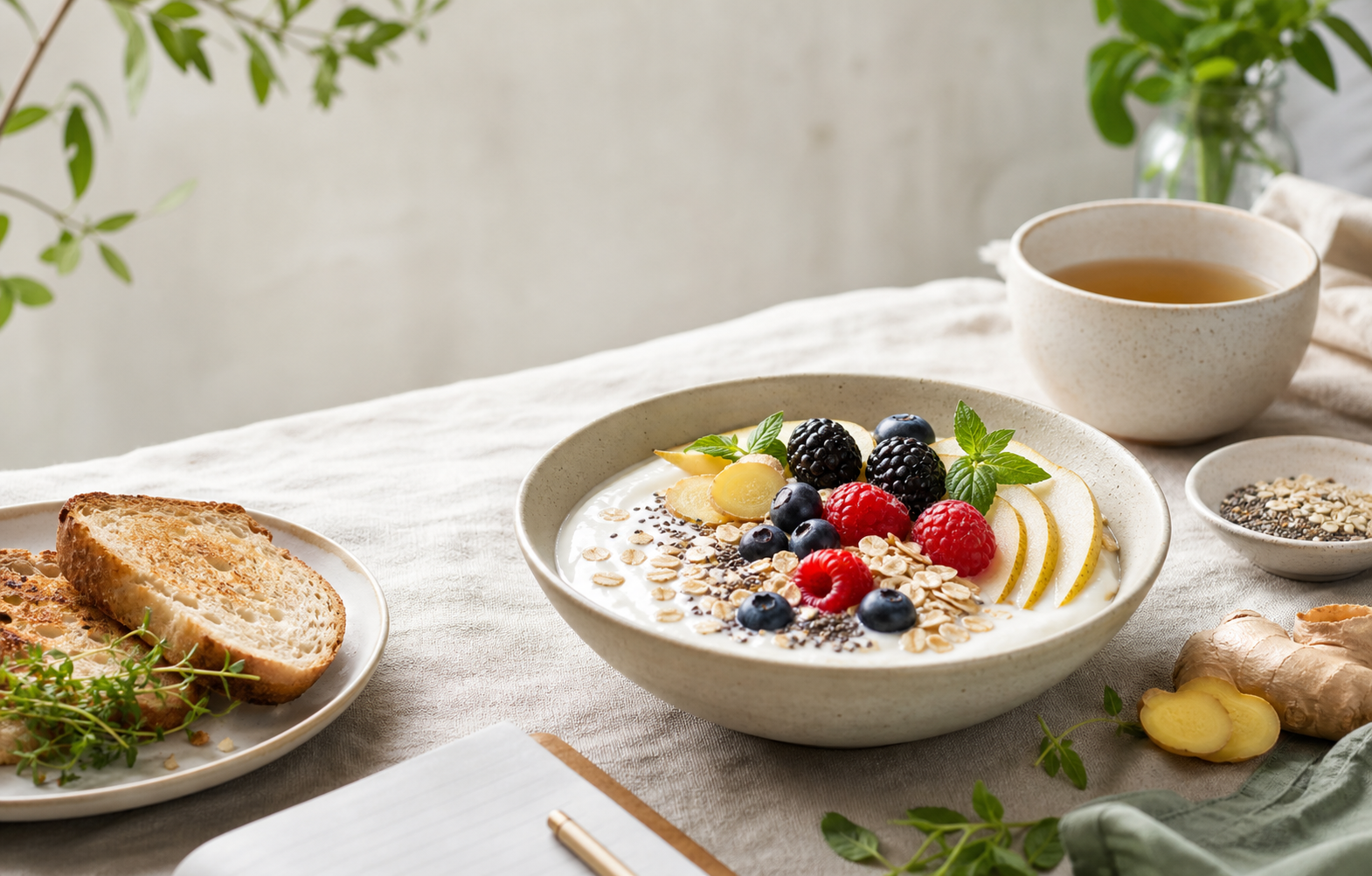
Good digestion is not just the absence of symptoms. It is also the ability to sit down, taste something, and feel at home in the moment. A bowl of yogurt with fruit, a plate of beans and greens, or toast with olive oil and tomatoes can be both useful and lovely.
That is the tone for Tarm: practical, curious, and generous. More plants, more rhythm, more noticing. Less panic at the table.